Camino de Santiago by Motorcycle: Complete Guide, Tips, Routes, and Everything You Need to Know
The Camino de Santiago by motorcycle It's a different way to experience the Camino de Santiago. It's not about replacing the experience of a pilgrim walking or cycling to Santiago, but about discovering northern Spain, and especially Galicia, from another perspective: that of the open road, freedom of movement, and traveling on two wheels.
More and more travelers are looking for information about How to do the Camino de Santiago by motorcycle, which routes are most recommended, if you can follow the official route, what are its advantages, what are the limitations, and which sections are truly the most spectacular for a motorcyclist. In this guide, we tell you all that in detail and also explain why Santiago de Compostela is one of the best starting points for continuing to discover Galicia by motorcycle.
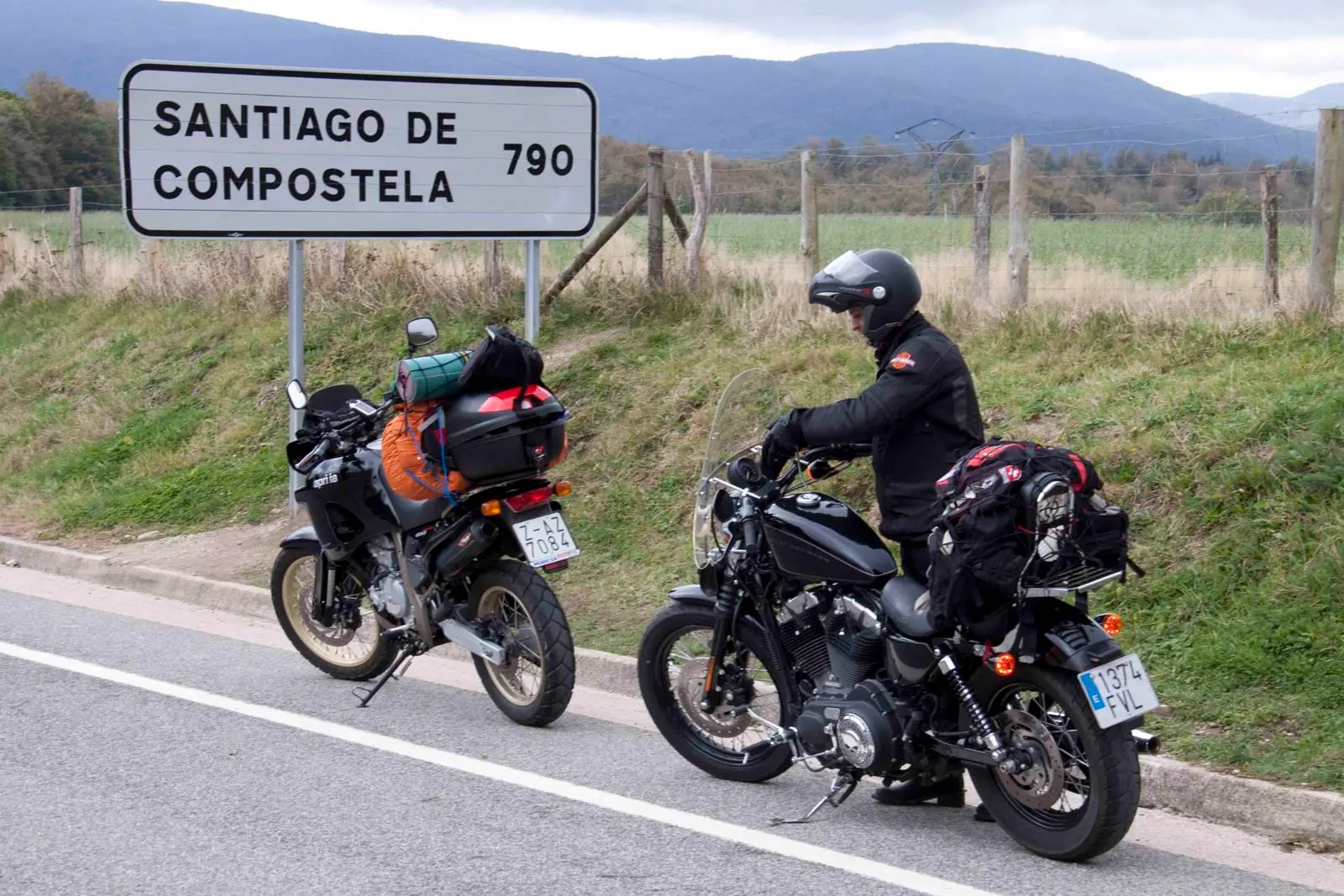
Can the Camino de Santiago be done by motorcycle?
Yes, Riding the Camino de Santiago on a motorcycle is possible., and it's also an increasingly common option among motorcyclists who want to experience the journey on their own terms. Of course, you need to understand what it entails. The motorcycle cannot follow the paths reserved for pilgrims on foot or many of the specific stretches for bicycles. The experience is made using roads open to traffic, parallel routes, or adapted itineraries.
This means that the Motorcycle Way is not an exact copy of the traditional pilgrimage, but it can be a very powerful experience. It allows you to connect stages, visit historic towns, reach Santiago, and then continue to some of Galicia's most impressive landscapes, such as the Costa da Morte, Fisterra, or Muxía.
For many people, the great appeal lies precisely there: in being able to combine the symbolism of Santiago with the pleasure of riding a motorcycle along secondary roads, fishing villages, mountain areas, and Atlantic landscapes.
How to do the Camino de Santiago by motorcycle, step by step
If you're thinking about organizing the trip, the first thing you should do is change your focus. Don't just think about “getting to Santiago,” but about building a motorcycle route with purpose, with stages, with good riding sections, and with interesting stops.
1. Choose the entry route to Santiago
You can arrive via different historic routes: the French Way, the Portuguese Way, the Northern Way, or even design your own entrance by combining roads and points along the Jacobean route. The choice depends on how many days you have, where you are starting from, and the type of journey you want to take.
Adapt the stages to the motorcycle
One of the great advantages of traveling by motorcycle is that you can cover much greater distances than a traditional pilgrim. But that doesn't mean you should undertake excessive journeys. The ideal is to find a balance between riding, sightseeing, dining, and rest.
3. Be clear that experience changes
On a motorcycle, the value is not just in the symbolism of arriving in Santiago, but in the entire journey. Sometimes even the best part begins right after arriving, when you can continue connecting some of the Best motorcycle routes in Galicia.
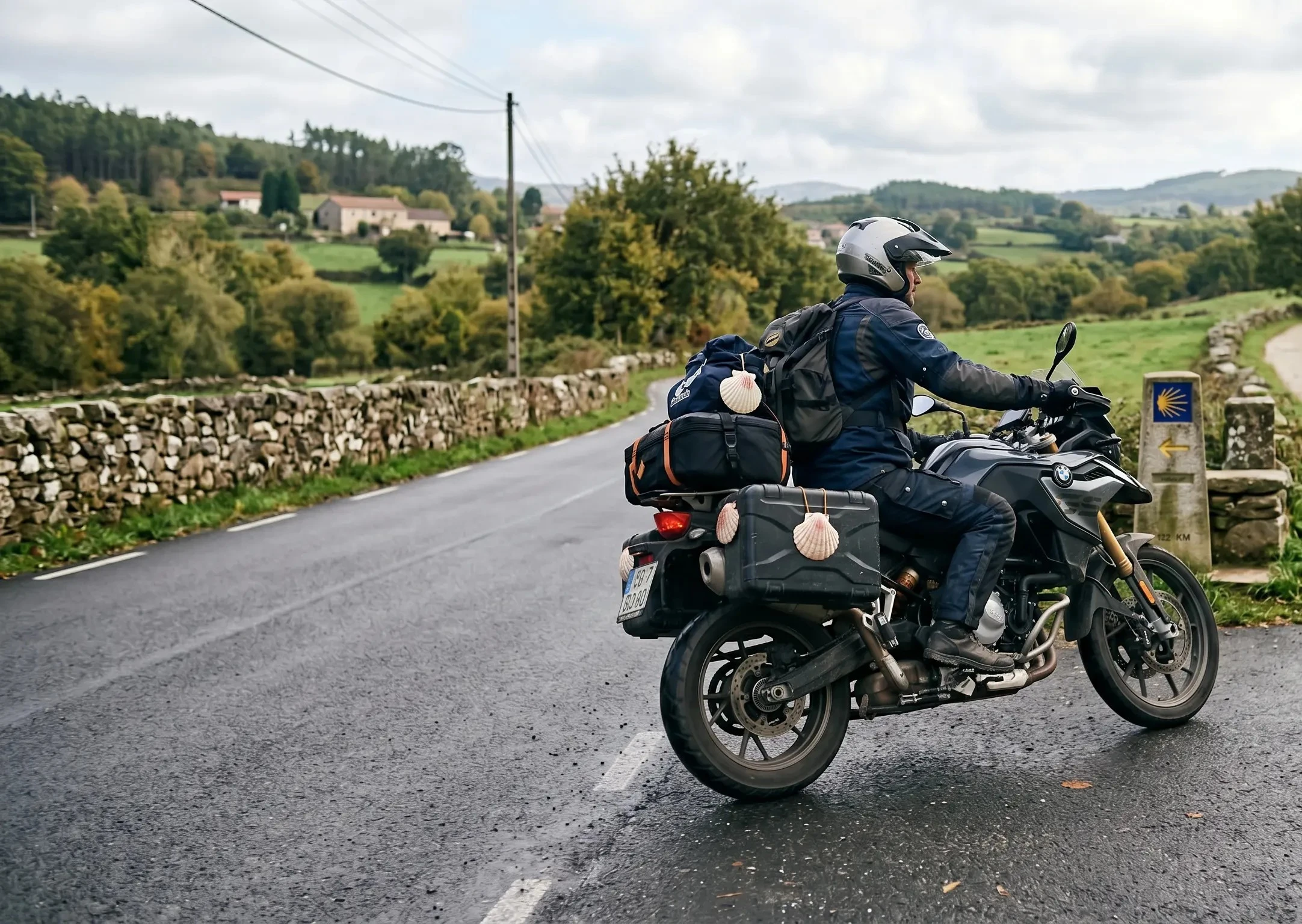
Advantages of doing the Camino de Santiago by motorcycle
If you're looking for a broad, flexible, and very visual travel experience, doing it by motorcycle makes a lot of sense. Here are some of its main advantages:
More freedom
You can modify the route, improvise detours, stop at viewpoints, get closer to the coast, or extend the route as you wish.
More variety
In a single getaway, you can combine a historic city, the coast, mountains, small towns, and very different roads.
More useful kilometers
By moving faster, you gain time to see more sights and enjoy a much more complete route.
More road experience
Galicia offers many secondary roads and very pleasant stretches for motorcycle travel without everything depending on highways or monotonous stretches.
More flexibility in travel
You can create a circular route, enter by one path and exit by another, or arrive in Santiago and then continue towards Fisterra or the Costa da Morte.
More journey, not just destination
The motorcycle turns the journey into a continuous touring experience, where the ride is almost as valuable as the destination.
Disadvantages and limitations of the Camino de Santiago by motorcycle
It is also important to talk about what it is not. The main limitation is that The motorcycle is not recognized as an official pilgrimage modality. This means that if you do the Camino by motorcycle, you won't receive the Compostela like a pilgrim on foot or by bicycle would.
Furthermore, you won't be able to follow the exact same route as pilgrims, nor will you have access to certain resources specifically for traditional pilgrims, like some public hostels.
Even so, for many people this doesn't pose a problem. If what you're looking for is to enjoy the journey, the road, and the experience of reaching Santiago by motorcycle, the route still holds incredible value.
Important: Riding the Camino de Santiago by motorcycle isn't “doing less,” it's doing it differently. The experience changes, but it remains a route full of history, symbolism, landscapes, and memorable moments.
The best Camino de Santiago routes to do by motorcycle are: * **Camino Francés (French Way):** This is the most popular route and well-maintained, making it easier for motorcycles. * **Camino del Norte (Northern Way):** This route offers stunning coastal scenery and generally good roads, though some parts can be more challenging. * **Camino Portugués (Portuguese Way):** Both the coastal and inland routes are suitable for motorcycles, offering beautiful landscapes through Portugal and into Spain. * **Camino Primitivo (Primitive Way):** While more mountainous and remote, this route can be very rewarding for experienced motorcyclists looking for a less crowded experience. When planning a motorcycle trip on the Camino de Santiago, consider: * **Road conditions:** Check for any recent road closures or construction. * **Weather:** Be prepared for varying weather conditions, especially if traveling outside of the summer months. * **Accommodation:** While many albergues cater to pilgrims on foot, you may need to book hotels or guesthouses in advance, especially in busier areas. * **Flexibility:** Allow for spontaneous stops and detours to fully enjoy the journey. * **Respect:** Remember the spirit of the Camino and be mindful of pilgrims walking the routes.
Actually, a large part of the Camino de Santiago routes can be traveled by motorcycle if they are properly adapted to road traffic. However, some fit better than others depending on the type of trip you want to make.
Camino Francés Motorcycle Route
It's the most famous route and one of the most interesting for those who want to embark on a great journey. It allows you to cross several regions, connect towns steeped in history, and build very varied stages. It also has more infrastructure, more well-known locations, and more stopping points.
Portuguese Way by motorbike
Very interesting if you're coming from Portugal or looking for a more compact tour. It has a really good mix of heritage, green spaces, charming villages, and very natural access to Santiago.
Galician sections of the Camino
Probably, for many motorcyclists, this is the best. Galicia has ideal conditions for motorcycle travel: green landscapes, coast, small towns, very enjoyable secondary roads, and a huge density of interesting spots.
If you add to that the possibility of linking up with coastal or inland itineraries, the trip grows considerably. Therefore, a good strategy is to arrive in Santiago and then continue with planned routes to discover the area. If you're looking for a base to do so, you can check out our proposals for Motorcycle routes in Galicia.
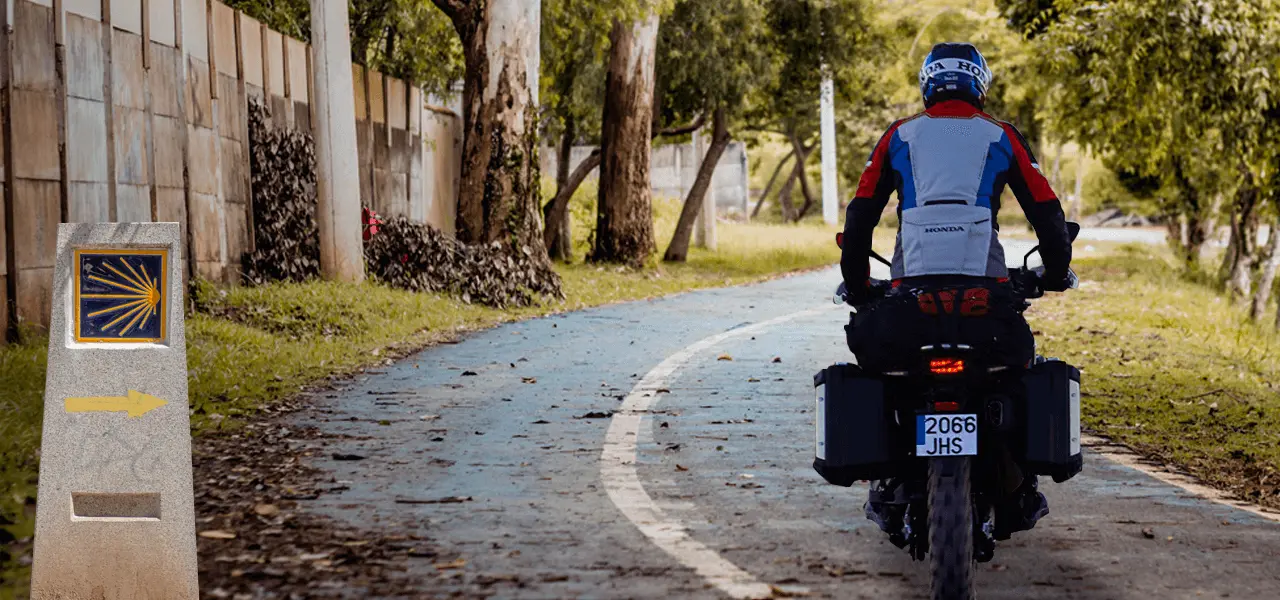
Must-do route: From Santiago to Fisterra by motorcycle
If there's a route that perfectly fits the idea of completing the Camino de Santiago by motorcycle, it's the one that goes from Santiago de Compostela to Fisterra. Historically, many pilgrims extended their journey to the sea, to the “end of the world,” and today it remains one of the most exciting routes you can take in Galicia.
It's a very balanced route: you don't need a huge mileage to enjoy it, it has the symbolic point of continuing beyond Santiago, and it also combines villages, winding roads, Atlantic scenery, and arrival at one of the most mythical places in the entire community.
- Approximate distance: 118 km
- Duration: 2–3 hours not including stops
- Difficulty: moderate
- Key highlights: Noia, Muros, Ézaro, Corcubión, and Fisterra Lighthouse
If you come to Santiago and want an unforgettable one-day itinerary, this is one of the best options. And if you still don't have a motorcycle or want to start your trip here, you can see the Motorcycle rental in Santiago and go straight to ride.
Prepare the motorcycle and the trip
Before setting off on the road, there are two things you need to prepare: the motorcycle and the trip's logistics.
Motorcycle tuning
Check tires, brakes, lights, oil, transmission, fluids, and pressure. On a long trip, a small failure can significantly complicate your experience.
Appropriate equipment
Even when traveling in a good season, Galicia's weather can change quickly. Bringing appropriate clothing, gloves, and protection against rain or wind is an investment in comfort and safety.
Documentation and planning
Bring all the motorcycle and driver documentation, review the stages, and be clear about the areas where you want to stop. The better the trip is planned, the more room you'll have to improvise well.
Tips for truly enjoying the Camino de Santiago by motorcycle
- Don't try to follow pedestrian pathsAdapt the route to allowed roads.
- Always respect the pilgrims, especially at accesses and villages along the route.
- Don't turn the trip into a raceThe important thing is the journey, not just arriving.
- Plan sensible stopsViewpoints, villages, food, and rest.
- Give Galicia timeOften, the best things happen after Santiago.
Is the Camino de Santiago worth doing by motorcycle?
Yes, it's definitely worth it, and highly so, if you understand the kind of trip you're looking for. It's not a traditional pilgrimage, but it can be an unparalleled road trip experience filled with scenery, culture, and freedom.
For many travelers, the ideal combination is this: arrive in Santiago by motorcycle, experience the symbolism of the destination, and then continue exploring Galicia as it should be, linking good roads, coast, mountains, and truly worthwhile driving routes.
If you want to prepare that part better, you can consult our routes, see the options for Motorcycle rental in Santiago to write to us from the page contact to resolve doubts.
Frequently Asked Questions about the Camino de Santiago by Motorcycle
Can the Camino de Santiago be done by motorcycle legally?
Yes, as long as you do it on roads open to traffic and not on trails or sections reserved for pedestrians or cyclists.
Do they give you the Compostela if you do the Camino de Santiago by motorcycle?
No. The motorcycle is not recognized as an official pilgrimage modality to obtain the Compostela.
What is one of the best motorcycle routes after arriving in Santiago?
The route from Santiago to Fisterra is one of the most recommended for its scenery, symbolism, and driving pleasure.
Can you rent a motorcycle in Santiago to tour Galicia?
Yes. If you want to start your experience from here, you can check the Motorcycle rental in Santiago.