
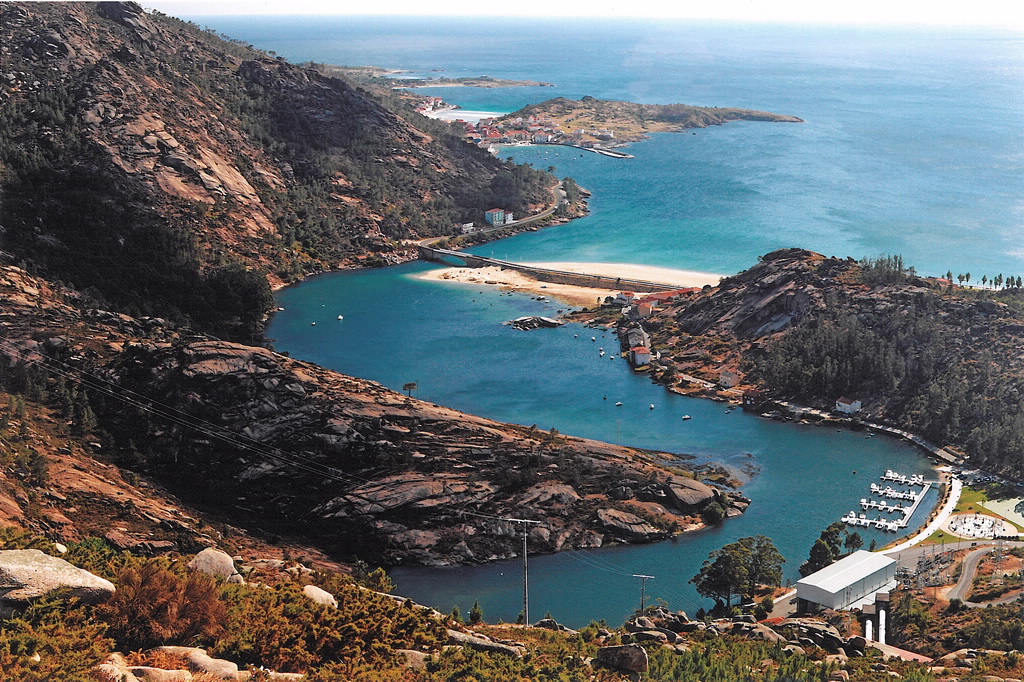
If you are looking one of the best plans from Santiago de Compostela, there's a route that practically has it all: a beautiful road, charming towns, Atlantic Ocean views, stops with Galician character, and the feeling of being on a real journey without going too far. We're talking about the motorcycle route from Santiago de Compostela to Fisterra via the old road, going through Noia, Muros, Carnota and Ézaro, and returning by Muxía.
It's a very complete getaway for a long day trip or even a more relaxed jornada if you prefer to stop at a leisurely pace, eat well, and enjoy the journey without rushing. Furthermore, Fisterra and Muxía are part of the Camino de Santiago to Fisterre and Muxía, the Jacobean pilgrimage route that starts from Santiago and heads towards the Costa da Morte, further reinforcing the symbolic and tourist appeal of this area.
Why is this route one of the best trips from Santiago de Compostela
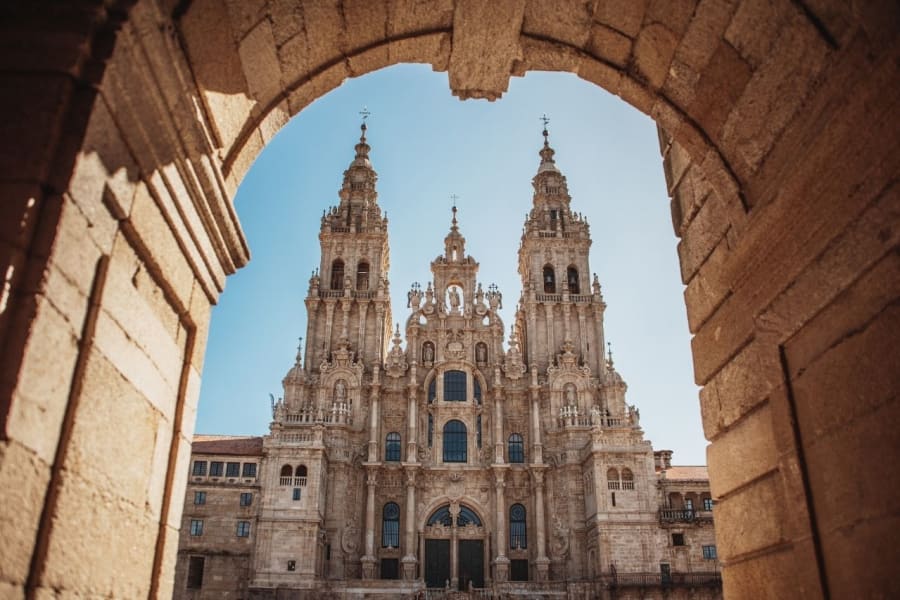
Leaving Santiago and heading for the west coast of Galicia is one of those plans that never fails. In relatively few kilometers, you go from the historic city to the open sea, passing by fishing villages, giant beaches, viewpoints, and powerful enclaves like Cape Finisterre, one of the great icons of the Galician coastline. Turismo de Galicia highlights Fisterra, O Ézaro, and this entire coastal strip as part of one of the most spectacular areas for driving or riding a motorcycle.
Furthermore, this route allows you to combine several types of experiences in one day: heritage in Noia, a maritime atmosphere in Muros, wild landscapes in Carnota, the Ézaro waterfall, the symbolism of the Fisterra lighthouse, and a return trip through Muxía, with its Atlantic surroundings and strong pilgrim and maritime identity.
Recommended Itinerary: Santiago – Noia – Muros – Carnota – Ézaro – Fisterra – Muxía – Santiago
The idea of this route is to leave Santiago heading towards Boredom, continue along the coast towards Walls, continue to Carnota, stop at The Ézaro, continue until Finisterre and return by Muxía before returning to Santiago.
It's a perfect tour for those who want to feel like they've truly made the most of their day. The outbound journey features a succession of very rewarding stops, and the return via Muxía provides a very satisfying conclusion, avoiding retracing the exact same route and adding a charming final stretch. The official Camino itself lists Fisterra and Muxía as final destinations for this Jacobean extension from Santiago, which contextualizes how special this route is.
First stop: Noia, a small Compostela by the estuary
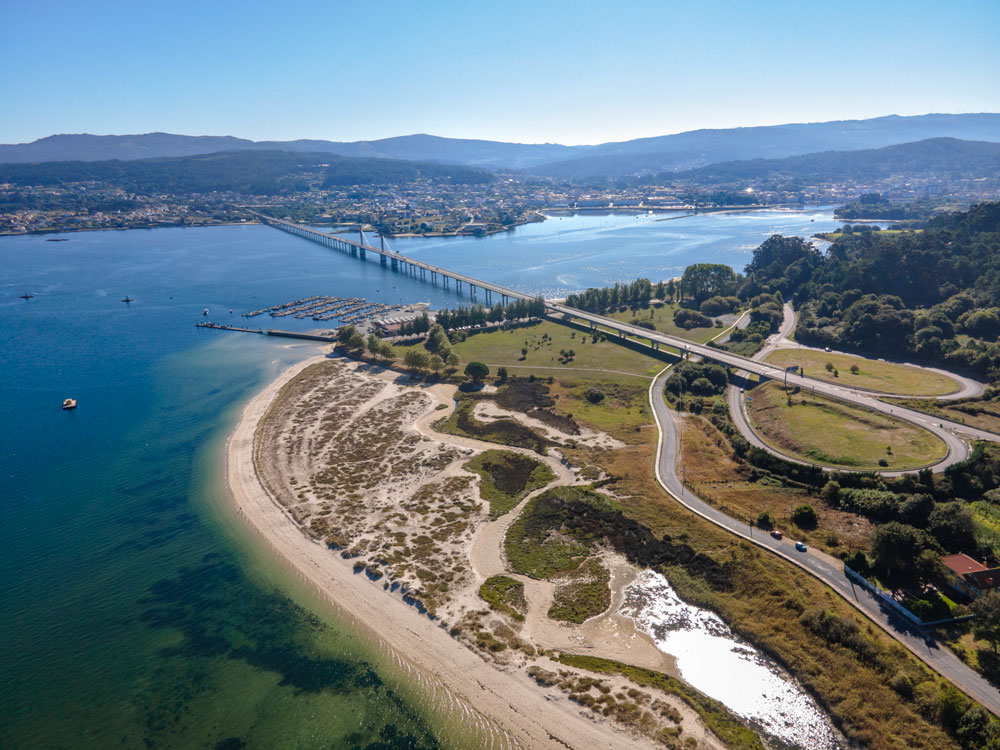
Noia is an ideal stop to start the route at a relaxed pace. Turismo de Galicia describes it as a kind of “Little Compostela”, underlining its historical value and its relationship with the coastal route to Fisterra.
It's a very good town for a first break, to have coffee, wander through the old town a bit, and gradually get into the atmosphere. Noia strikes that perfect balance between heritage and local life, so it works very well as the start of your getaway.
What to see in Noia
Stroll through its historic center, enjoy the estuary, and take the opportunity for a peaceful first stop. You don't need to spend hours here for it to be worthwhile; even a short visit adds a lot to the overall route.
Second stop: Muros, a marine essence on the Costa da Morte
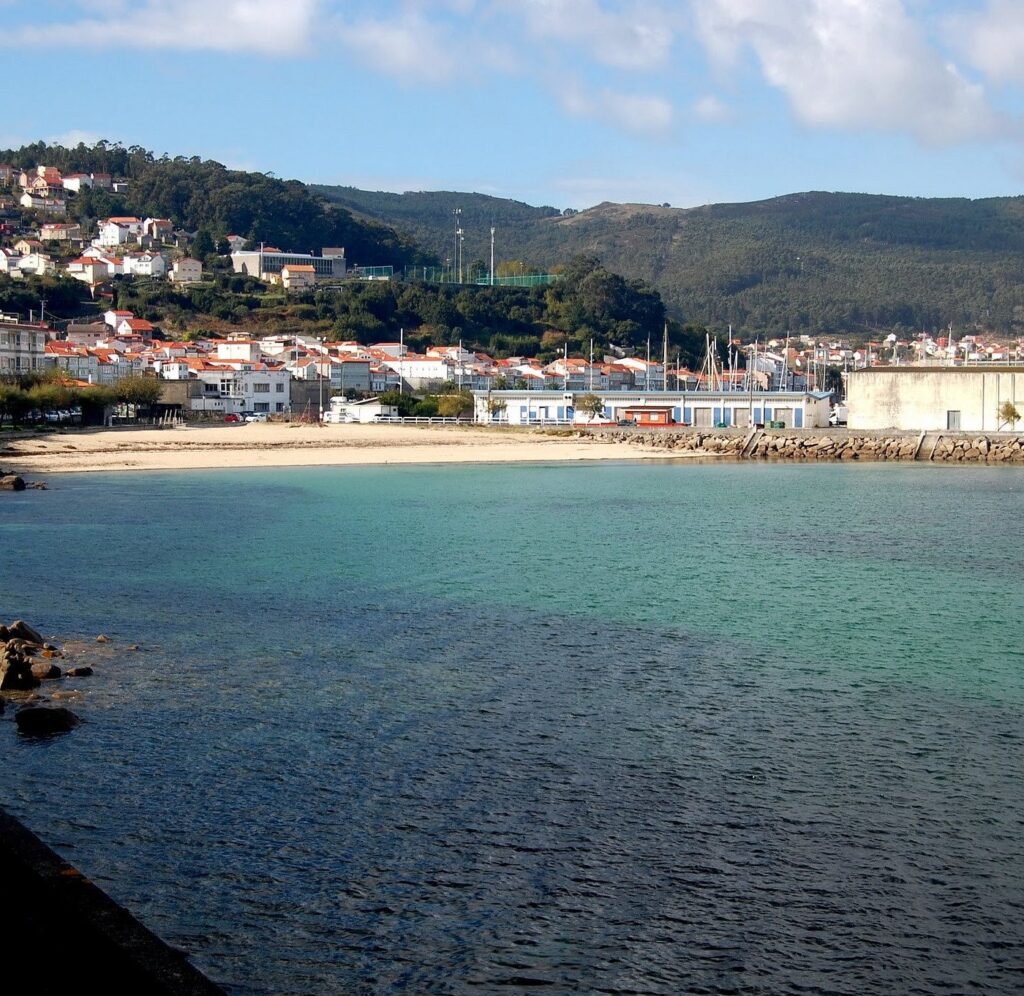
Following the road, you arrive at Muros, one of those Galician seaside towns with a great deal of character. Official tourist information highlights its historic center and its identity tied to the sea.
Muros is one of the most rewarding stops on the entire route because it combines a pleasant walk, the harbor, a local atmosphere, and good gastronomy very well. If you like to enjoy the journey without rushing, it's worth getting off your motorcycle here, walking for a while, and soaking in the atmosphere.
What to do in Muros
The best thing to do is walk around the historic center, peek at the port, and take a longer break if you want to eat or have a drink with a view.
Third stop: Carnota and one of the most open landscapes on the route.
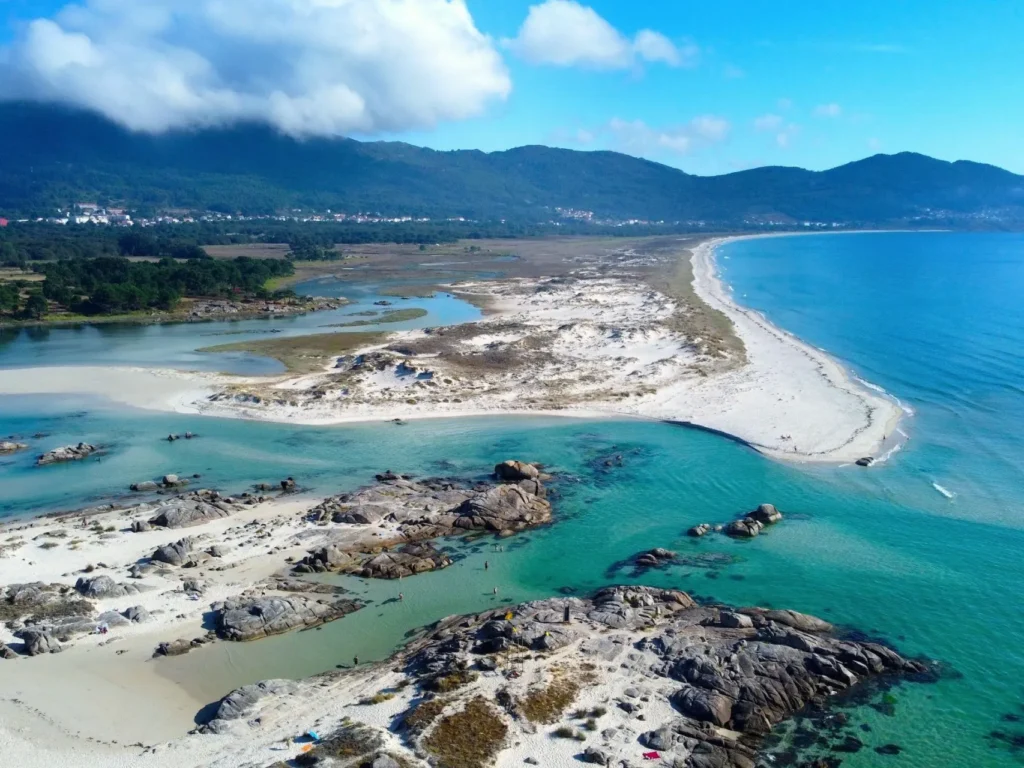
After Muros, the route gains even more scenic strength. The coast opens up, and large sandy beaches and mountains begin to appear in the distance. Turismo de Galicia describes this stretch towards Fisterra as a coast of wide beaches open to the ocean with elevated reliefs behind, an image that totally fits the surroundings of Carnota.
Carnota is a great stop for those who especially enjoy the scenery. Here, the great protagonist is the environment: open sea, wide-open views, and that feeling of already entering the most scenic Costa da Morte.
Muros is one of the most rewarding stops on the entire route because it combines a pleasant walk, the harbor, a local atmosphere, and good gastronomy very well. If you like to enjoy the journey without rushing, it's worth getting off your motorcycle here, walking for a while, and soaking in the atmosphere.
What to see in Carnota
The most recommended thing is to stop at a viewpoint, enjoy the surroundings and leave room for photos. It's an area for contemplation rather than for rushing.
Fourth stop: O Ézaro and the Xallas waterfall
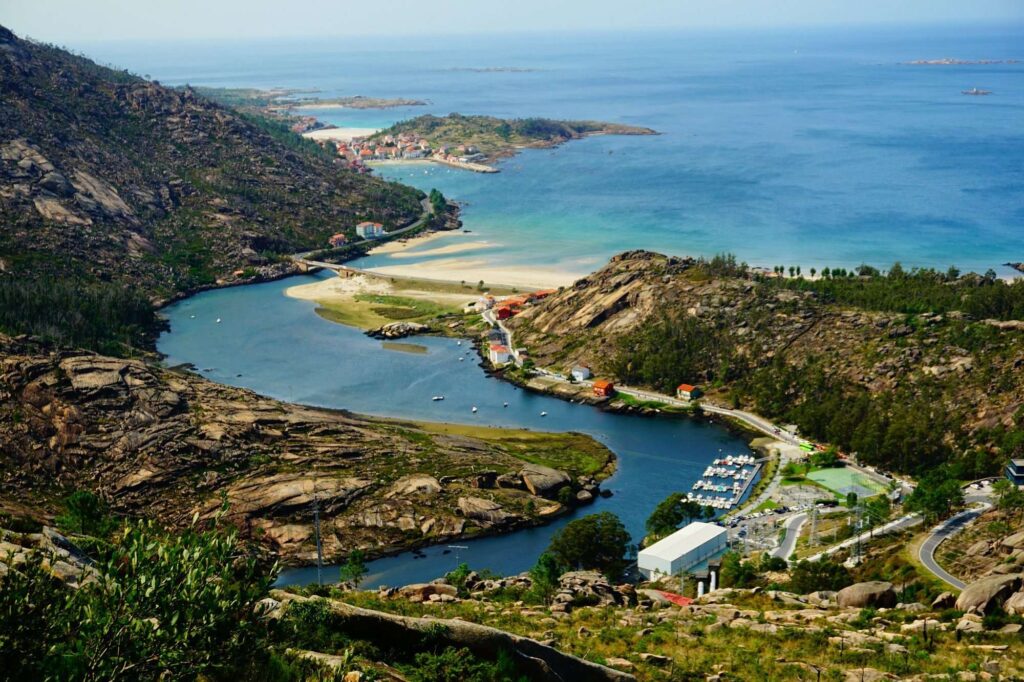
One of the most striking points on this route is O Ézaro. Turismo de Galicia highlights this area for the coexistence of the coastal landscape, the surroundings of O Pindo, the view of Cabo Fisterra in the distance, and the detour to the famous Xallas waterfall.
Ézaro is a stop that is very different from the rest because it introduces a powerful natural element into an already spectacular route. If you're coming from Santiago looking for a plan that combines driving and memorable landscapes, this spot is one of the most remembered.
What to see in O Ézaro
The waterfall and the general surroundings. It's worth stopping, taking a short walk, and enjoying one of the most recognizable sights in this part of Galicia. Furthermore, the natural space in the area is closely linked to the Xallas River, the Ézaro waterfall, and the O Pindo massif.
Fifth stop: Fisterra, mythical end by the ocean
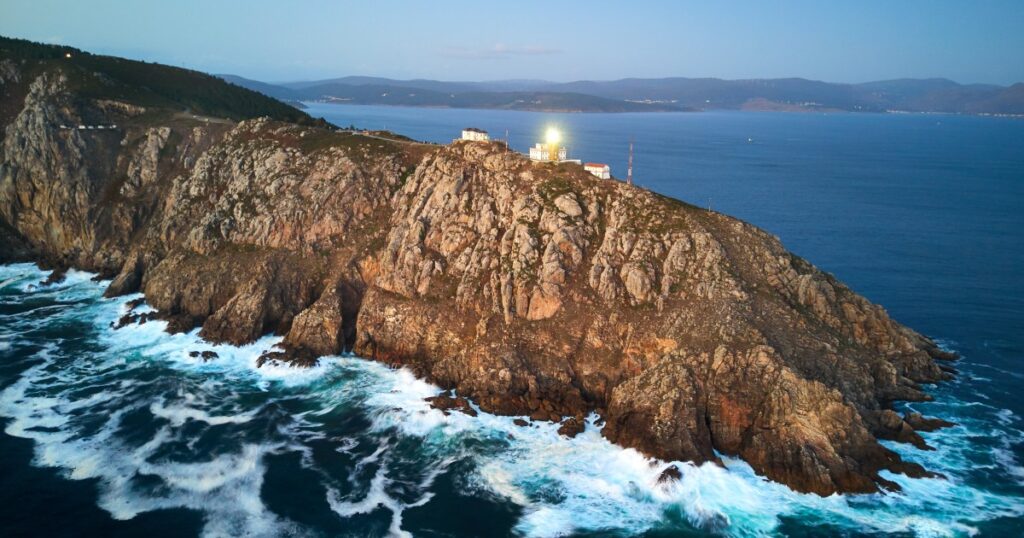
Reaching Fisterra always has something special about it. Cape Fisterra is one of the most symbolic places in Galicia and, according to official information about the Camino, the final destination of this Jacobean extension from Santiago, along with Muxía.
Galicia Tourism highlights the panoramic views from the cape over the ocean, the Ría de Corcubión, the coast of Carnota, and the granite massif of O Pindo.
What to see in Fisterra
The great must-see is the environment of the cape and the lighthouse. It's the stop that gives emotional meaning to the entire trip. This is where the mix of extreme landscape, symbolism, and the end of a journey is most noticeable.
The return by Muxía: the perfect end to the route
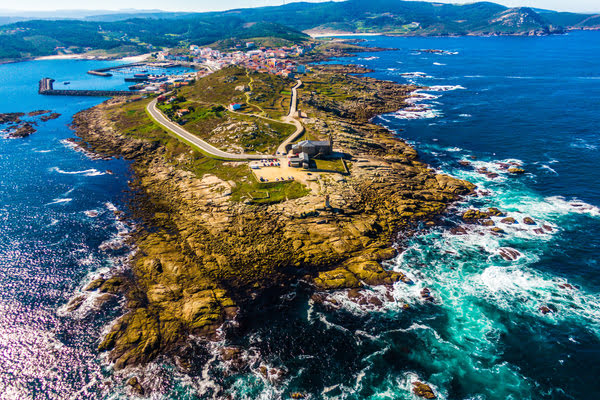
Returning via Muxía instead of simply retracing your steps greatly enhances the excursion. According to the official Camino, Muxía, along with Fisterra, is the other grand finale of this Jacobean route, with the Santuario da Virxe da Barca as one of its most emblematic points.
The stretch between Fisterra and Muxía is officially described as a stage with a constant presence of the sea, beaches, and very distinct landscape landmarks.
What to see in Muxía
The most well-known aspects are the sanctuary environment and the town's relationship with the sea and its pilgrim tradition. It is also highlighted in tourist materials for its seafaring heritage, including the traditional conger eel drying sheds.
How to organize the route to make the most of it
The best way to do this getaway is to leave early from Santiago and plan it as a full day. It's not a route to do stressed or in a hurry, because a large part of its value is in the stops and the journey itself.
Recommended organization
Start early, make a brief first stop in Noia, use Muros as a convenient place to rest or eat, set aside time for Ézaro, and arrive in Fisterra with enough time to enjoy the cape. The return trip via Muxía works very well in the afternoon, when you'll want to end the day with one last special stop before returning to Santiago.
Practical advice
Don't try to “check all the boxes” at full speed. It's better to choose your stops wisely, leave some wiggle room, and enjoy the journey. This route isn't just about reaching Fisterra, but about chaining together places that are worthwhile on their own.
What makes this motorcycle route special?
On a motorcycle, this getaway is even better. The variety of the landscape, the transition between inland, estuary, and open coast, and the feeling of heading towards the end of the Galician world give the journey a lot of weight in itself. The Costa da Morte is one of the most attractive areas of Galicia to explore by car, something that is also reflected in the official routes of Turismo de Galicia.
For those seeking an authentic experience from Santiago, this is one of those routes that alone justify a getaway.
One of the best plans from Santiago de Compostela
If you are looking for flights from Santiago de Compostela that are really worth it, this route to Fisterra to Noia, Muros, Carnota, and Ézaro, returning via Muxía, it is one of the most complete options you can choose. It combines beautiful towns, the sea, the road, Galician identity, and very recognizable places in western Galicia in a single day. The tourist relevance of Fisterra and Muxía, the landscape value of O Ézaro, and the character of towns like Noia and Muros are widely covered by official tourism and Camino de Santiago sources.
And what's more, it has something that fits especially well with Franky Moto Adventures: it's not just a destination, it's a journey to be enjoyed from start to finish.